Introduction
Tired of plain dresses that look flat and forgettable? You are not alone. Many DIY fashion lovers start with a great dress or jacket but feel something is missing. The outfit looks clean, but it lacks sparkle, detail, and personality.
So you try to fix it. You buy cheap decorative patches online. Maybe a few rhinestones, some lace trim, or a beaded applique. You attach them carefully. At first, the outfit looks amazing.
Then a problem shows up.
After a few washes, the stones fall off. The sequins lose shine. The lace stretches out or fades. Suddenly your upgraded outfit looks worse than before.
This happens because many decorative materials are poorly made. Low-density fabrics, weak adhesives, and thin threadwork cannot survive regular wear.
But the good news? Quality beaded appliques, sequin patches, rhinestone decorations, and floral lace fabrics are designed to last. When you choose the right materials and use them correctly, they can completely transform clothing.
Stick on some sequins and watch a plain jacket turn into a party piece. Add lace panels and a simple dress suddenly feels designer.
In this guide, we will break down what these materials are, how they work, their real pros and cons, and how DIY designers use them to create standout fashion.
What Are Beaded and Sequin Appliques?
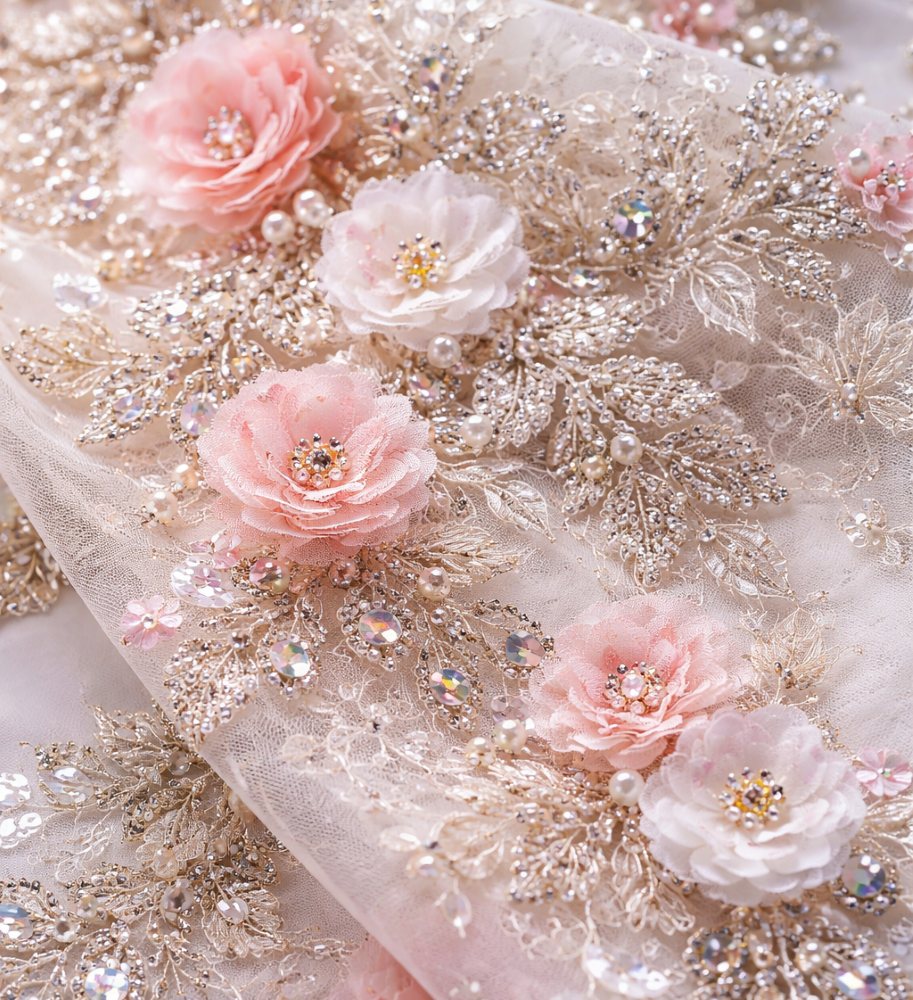
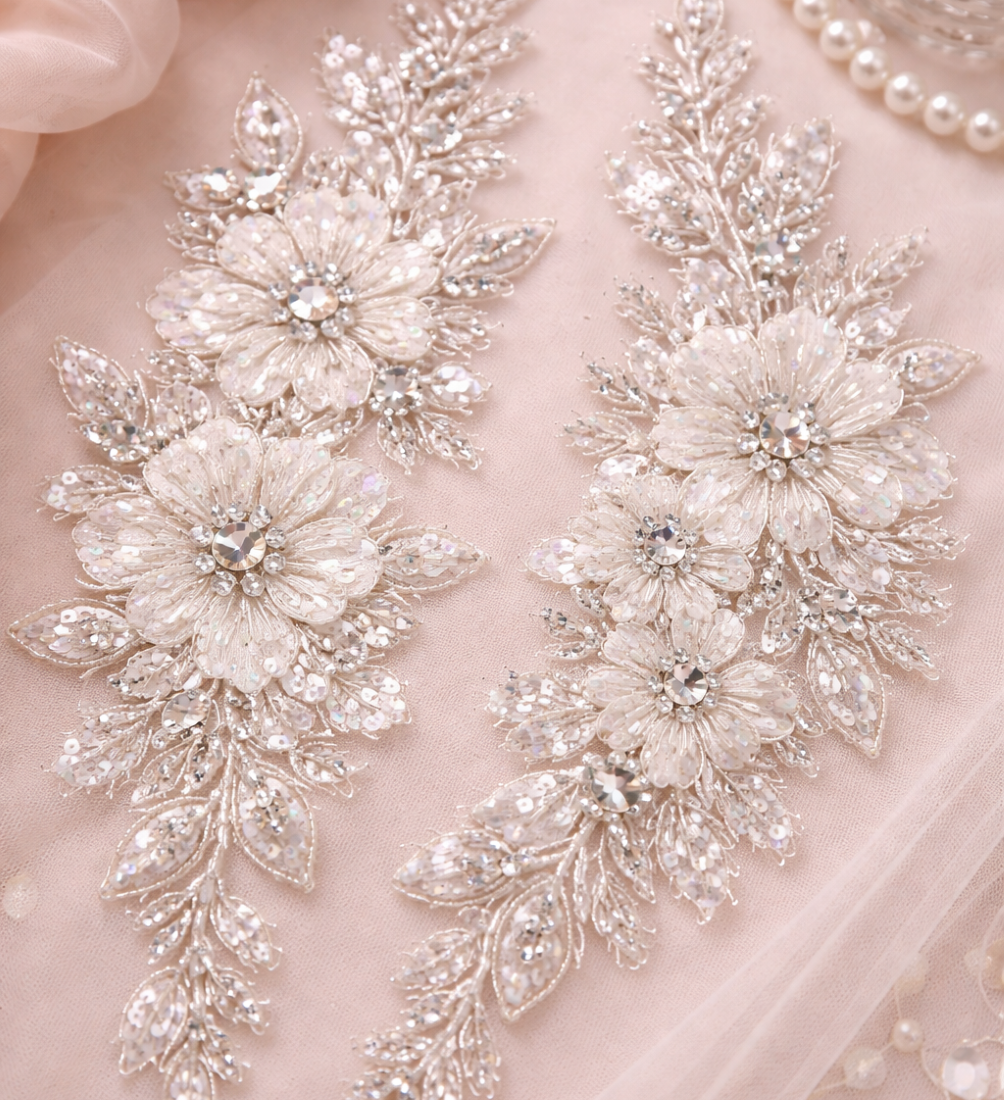
Beaded and sequin appliques are decorative patches sewn or glued onto fabric to add texture, shine, and patterns. They are widely used in bridal gowns, evening wear, costumes, and DIY clothing projects.
Most appliques are made on a mesh or organza base fabric with beads, sequins, or crystals stitched on top.
Typical applique specifications from fabric suppliers include:
-
Base fabric density: 80–150 gsm mesh
-
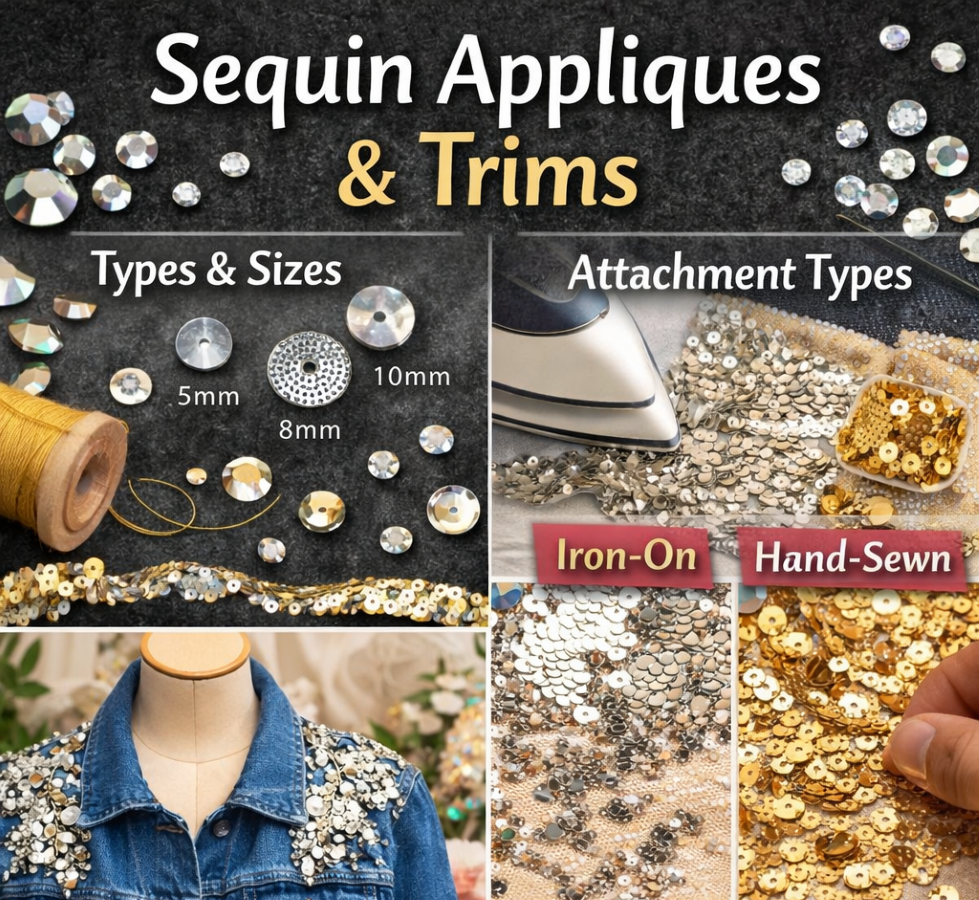
Sequin diameter: 3mm–8mm
-
Bead density: 200–600 beads per square foot
-
Thread type: polyester or nylon filament
These small details affect durability. For example, a higher bead density means the design looks fuller but also requires stronger stitching.
DIY creators usually apply these pieces to:
-
Dresses
-
Denim jackets
-
Handbags
-
Shoes
-
Bridal veils
-
Stage costumes
The biggest advantage is speed. Instead of embroidering by hand for hours, you simply attach the applique and get the same visual effect.
Some appliques are symmetrical motifs used on necklines or waist areas, while others are scatter patches placed randomly across garments.
But the sparkle often comes from rhinestones.
Rhinestone Types and Sizes
Rhinestones are small decorative crystals used to reflect light. They come in many sizes and attachment styles.
Common sizes used in fashion:
| Size | Diameter | Typical Use |
|---|---|---|
| SS12 | ~3mm | Nail art, fine details |
| SS16 | ~4mm | Dresses, dance costumes |
| SS20 | ~5mm | Denim decoration |
| SS30 | ~6.5mm | Stage outfits |
| 10–20mm | Large stones | Statement designs |
Two main attachment methods exist.
Glue-on rhinestones
These are flat-backed stones attached using fabric adhesive. They are common for DIY projects.
Pros:
-
Fast application
-
Cheap
-
Easy for beginners
Cons:
-
Adhesive may weaken after washing
Sew-on rhinestones
These stones have small holes or metal settings.
Pros:
-
Strong attachment
-
Durable for heavy garments
Cons:
-
Requires sewing skill
-
Takes more time
Professional costume designers often combine both types.
Floral Lace Materials: Features and Uses
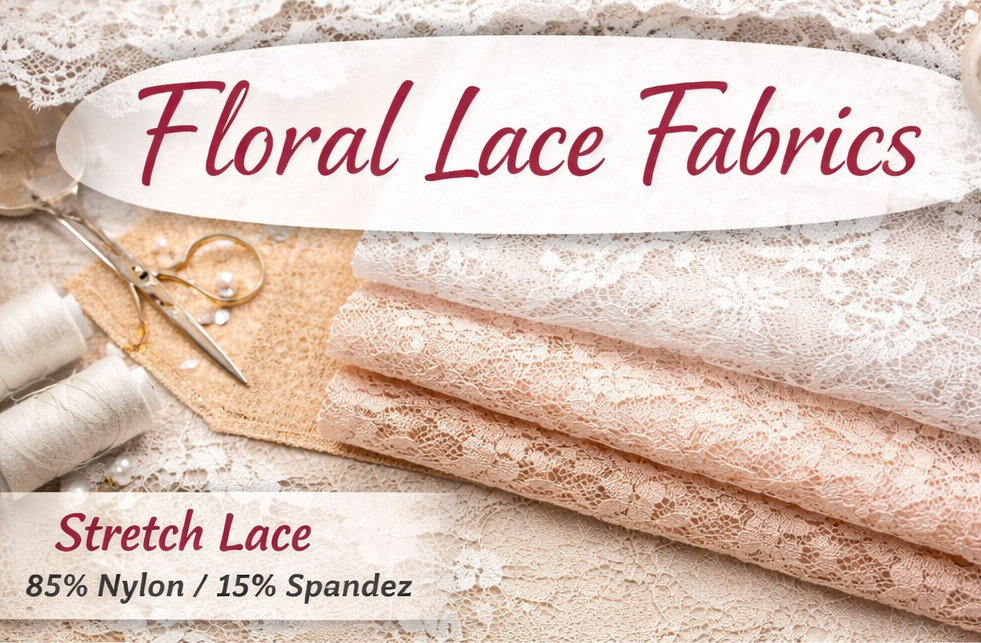
Floral lace fabric is another powerful decoration tool in DIY fashion. Instead of sparkle, lace adds texture and pattern.
Lace fabrics are produced using warp knitting or embroidery machines that create open floral patterns.
Common lace compositions include:
| Material | Composition | Features |
|---|---|---|
| Nylon lace | 100% nylon | Lightweight and strong |
| Stretch lace | 85% nylon / 15% spandex | Flexible, good for fitted clothing |
| Cotton blend lace | 60% cotton / 40% nylon | Soft feel with durability |
| Polyester lace | 100% polyester | Low cost, wrinkle resistant |
Typical lace weight ranges from 90 gsm to 180 gsm, depending on pattern density.
Higher GSM lace has thicker embroidery threads and better durability.
Stretch lace is popular in:
-
Lingerie
-
Bodycon dresses
-
Dancewear
Cotton blend lace works well for:
-
Summer dresses
-
Blouses
-
Casual tops
DIY designers often cut lace into shapes and apply it as overlays.
Example:
A simple cotton dress can be upgraded by adding lace panels to the sleeves or neckline. The lace pattern creates depth without needing beads or sequins.
Many bridal gowns combine lace overlays with beaded appliques to balance texture and shine.
Pros, Cons, and Real-World Case Studies
Decorative materials are powerful tools, but they come with trade-offs.
Pros
1. Visual impact
Even small patches can transform clothing.
A denim jacket with 30–50 rhinestones can reflect light dramatically under stage lighting.
2. Low cost design upgrade
Fabric suppliers report average prices:
-
Sequin appliques: $2–$10 each
-
Lace fabric: $5–$20 per yard
-
Rhinestones: $3–$15 per pack
This means DIY creators can create designer-style clothing cheaply.
3. Customization
Designers can place decorations exactly where they want.
Cons
1. Durability varies
Cheap rhinestones often fail adhesion tests.
Some fabric manufacturers test durability using wash cycles.
Example test results from garment decoration suppliers:
-
High-quality sew-on rhinestones: 500 wash cycles without detachment
-
Glue-on rhinestones: 100–200 cycles
-
Low-quality adhesive stones: 20–30 cycles
2. Fabric weight increase
Heavy beadwork adds weight.
A heavily decorated bridal applique may weigh 150–250 grams, which affects lightweight fabrics.
3. Maintenance requirements
Some decorated clothing must be hand-washed.
Case Study: Wedding Dress Embellishment
A bridal designer added lace and beaded appliques to a plain satin gown.
Materials used:
-
Lace overlay: 140 gsm floral lace
-
12 symmetrical beaded appliques
-
Sew-on rhinestones (SS20 size)
Results:
-
Production cost increase: $45
-
Retail price increase: $280
The design appeared more complex without major pattern changes.
This shows how decorative materials significantly raise perceived value.
DIY and Pro Examples in Action
These materials are widely used by independent creators and professional designers.
Case 1: Etsy Clothing Seller
A small Etsy shop upgraded basic denim jackets.
Process:
-
Add 40–60 rhinestones
-
Attach two sequin shoulder appliques
Result:
Plain $25 jackets sold for $85–$120 after decoration.
Case 2: Prom Dress Upgrade
A DIY creator added floral lace sleeves to a simple dress.
Materials:
-
Stretch lace (120 gsm)
-
Two lace applique panels
Total cost: $18
The finished dress looked like a boutique design.
Case 3: Dance Costume Sparkle
Dance costumes require strong decorations.
Designers typically use:
-
Sew-on rhinestones
-
High-density sequin appliques
These survive stage lighting and repeated washing.
Case 4: Runway-Inspired DIY
Many fashion enthusiasts recreate runway looks.
For example, designer gowns with crystal embroidery can be replicated using:
-
Rhinestone chains
-
Large beaded appliques
-
Lace overlays
This allows people to mimic luxury fashion with affordable materials.
FAQs
How to attach rhinestone appliques?
You can attach them using fabric glue, hotfix tools, or sewing depending on the stone type.
Are glue-on rhinestones durable?
They can last 100–200 wash cycles, but sew-on stones last longer.
What fabric works best with appliques?
Medium-weight fabrics like denim, satin, and cotton blends hold decorations well.
Can lace be sewn onto stretch fabric?
Yes, but stretch lace works best because it moves with the garment.
Do sequins fade over time?
Quality sequins made from polyester film resist fading and maintain shine.
How many appliques should be used on a dress?
Most designers use 3–10 pieces depending on garment size and pattern.
Conclusion
Plain outfits do not have to stay plain. If your clothes feel dull or unfinished, decorative materials can change everything.
Beaded appliques add texture. Sequins bring sparkle. Rhinestones reflect light. Floral lace creates pattern and depth.
The key is choosing good materials. High-density lace, properly stitched beads, and strong rhinestone settings make a big difference in durability.
With the right supplies and a little creativity, you can transform everyday clothing into unique fashion pieces.
Start experimenting, try different combinations, and upgrade your wardrobe one applique at a time.