Introduction
You buy a dress, curtain, or fabric for a DIY project. The base looks fine, but the edges feel plain. This is a common problem in both fashion and crafts. People want something that stands out, but they do not want to rebuild the entire piece. That is where lace borders, lace with sequins, and rhinestone and sequin appliques come in.
These trims are simple add-ons. You stitch or glue them to edges, sleeves, hems, or even bags. In minutes, the look changes. Lace borders give structure. Sequins reflect light. Rhinestone and sequin appliques add a layered effect that feels more finished.
This is not just a trend. Platforms like Etsy and Amazon show steady demand. Public seller reports in 2025 noted a 25% increase in sales of sequin lace borders. That means more people are solving the same problem.
In this post, we will break it down using a simple approach. First, we look at the problem. Then we push deeper into why it matters. Finally, we show how lace borders, sequins, and appliques solve it in practical ways.
The Problem
Plain edges are the main issue. When you look at a dress, curtain, or craft item, the edges define the final impression. If they look flat, the whole piece feels incomplete. This happens a lot with ready-made clothes and basic fabric materials.
Mass production focuses on cost. Many brands skip detailed trims to save money. As a result, you get clean stitching but no extra design. Curtains look functional but not decorative. Dresses look wearable but not special. Even handmade projects can feel unfinished if the edges are left plain.
Another problem is consistency. You may try to add details with embroidery or paint, but results vary. Not everyone has time or skill for that. So people end up leaving things simple, even when they want more style.
There is also the issue of visibility. Edges are the most noticeable parts. Hems, sleeves, and borders catch attention first. If those areas lack detail, the item does not stand out, especially in events or photos.
Finally, there is a gap between effort and result. You might spend hours making something, but without finishing touches, it still looks basic. That creates a mismatch between time invested and the final look. This is where most people feel stuck.
Agitate It
Now think about real situations. You attend a wedding wearing a simple outfit. Others have dresses with lace and sequins. Their clothes reflect light and look layered. Yours looks plain in comparison. This is a common experience.
Or imagine selling handmade items online. You upload your product next to others with decorated edges. Buyers scroll fast. Items with lace borders or rhinestone appliques get more clicks. Yours gets ignored, even if the base quality is good.
This creates frustration. You know your product or outfit is not bad, but it does not grab attention. In marketplaces like Etsy or eBay, visibility matters. Data from seller tools like Terapeak shows listings with embellished trims often perform better in categories like wedding wear and crafts.
There is also pressure from social media. Photos highlight details. Plain edges look flat in pictures. Items with sequins or appliques catch light and look better in images. This affects both personal use and selling.
Over time, this leads to hesitation. You may stop trying new designs because results do not match expectations. Or you keep buying new items instead of upgrading what you already have.
The problem is not the base material. The problem is the lack of finishing detail. And that is exactly what lace borders and sequins address.
The Solution
Lace borders, lace with sequins, and rhinestone and sequin appliques provide a direct solution. They focus on edges and surfaces where attention naturally goes.
First, they are easy to apply. You can sew them with basic stitching or attach them using fabric glue. No advanced skills are required. This removes the barrier of time and effort.
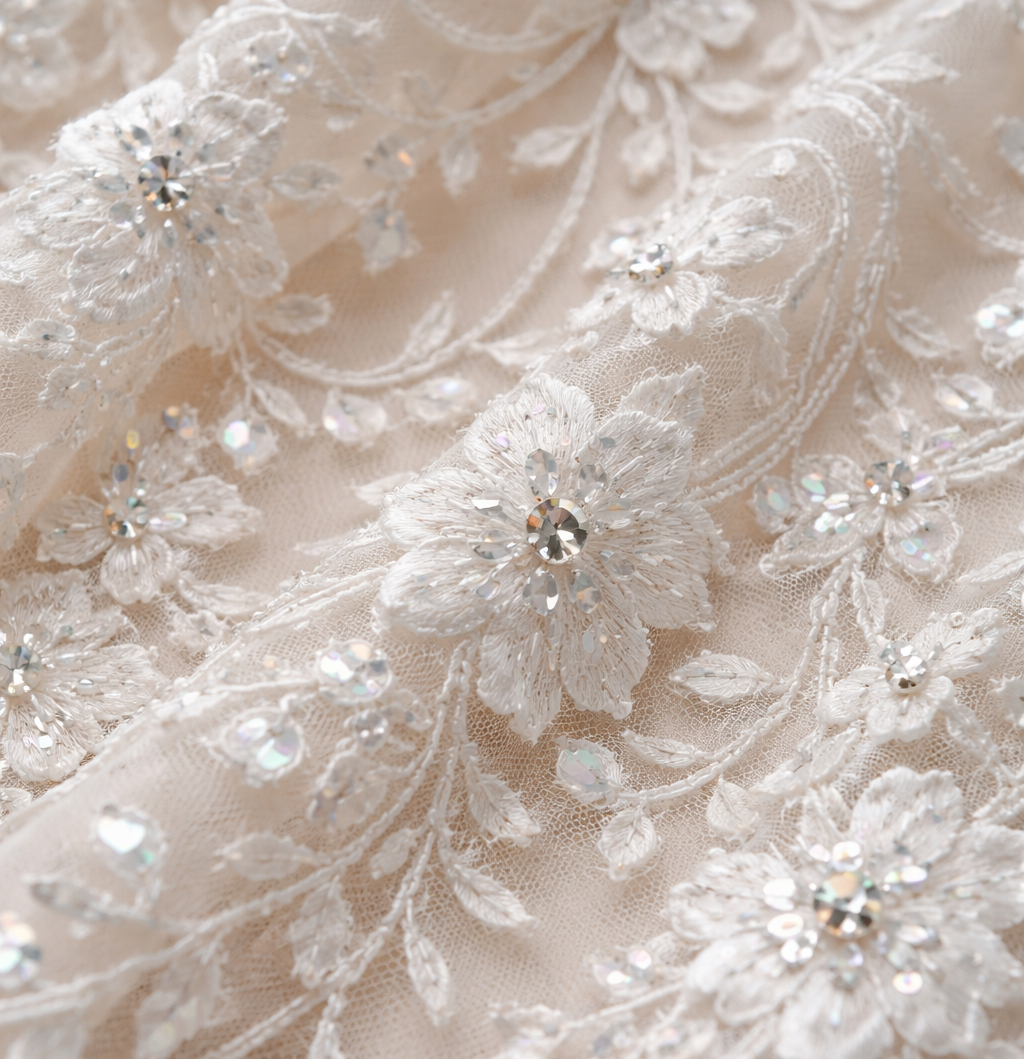
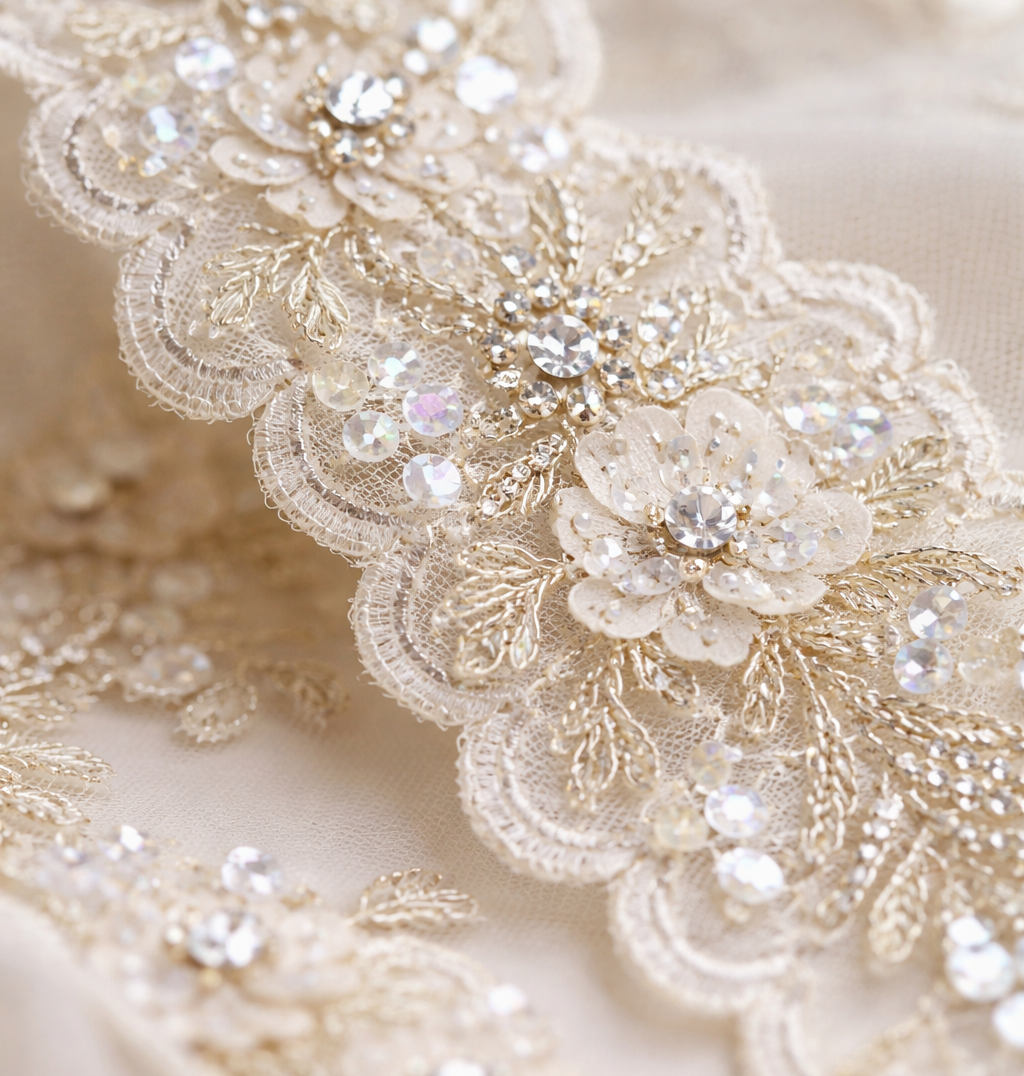
Second, they create instant contrast. Lace borders add texture. Sequins reflect light. Rhinestone appliques add small focal points. Together, they change how the item looks without altering the base structure.
Here is how you can use them step by step:
-
Identify the edge or area
Look at hems, sleeves, neckline, or borders of curtains and table covers. These areas benefit the most from added detail. -
Choose the right trim
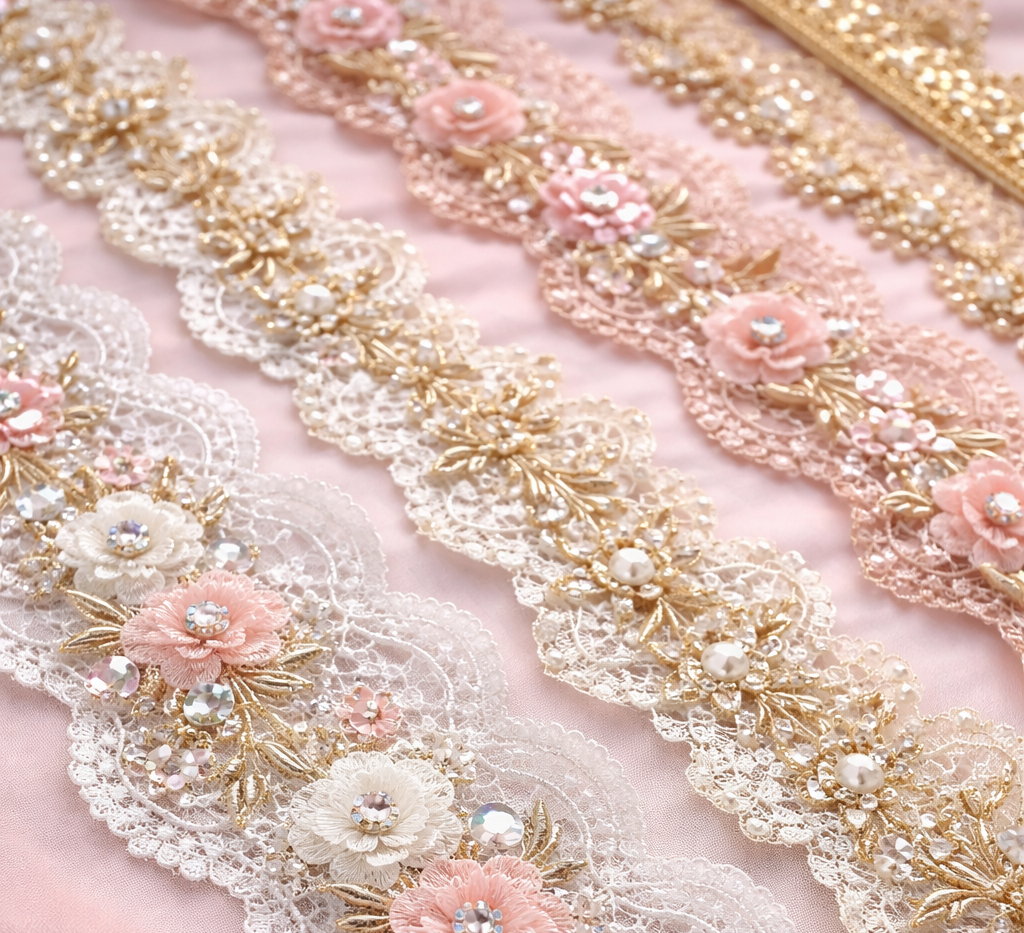
Lace borders come in different widths. Narrow trims work for sleeves. Wider ones suit hems or curtains. Sequins and rhinestones can be embedded in lace or added separately. -
Measure and cut
Measure the length you need. Cut the lace or applique carefully to match the edge. -
Attach the trim
Use stitching for durability. For quick fixes, fabric glue works. Make sure the trim is aligned properly. -
Check the finish
Look at the piece from a distance. The added trim should create a clear outline and improve visibility.
The benefits are practical. You save money by upgrading existing items. You improve visual appeal quickly. You also increase perceived value. This is important for sellers.
Market data supports this. Etsy sellers reported a 25% increase in sequin lace border sales in 2025. This shows strong demand. Buyers prefer items with visible detail.
Rhinestone and sequin appliques also allow customization. You can place them in patterns or clusters. This flexibility helps both beginners and experienced designers.
In simple terms, these trims solve the problem by focusing on what people notice first. They turn plain edges into defined features. And they do it without complex tools or high costs.
Features
-
Lace borders are usually 1–2 inches wide, suitable for most edges
-
Average price ranges from $3 to $8 per yard on Amazon
-
Sequins add around 10 grams per yard, increasing durability without heavy weight
-
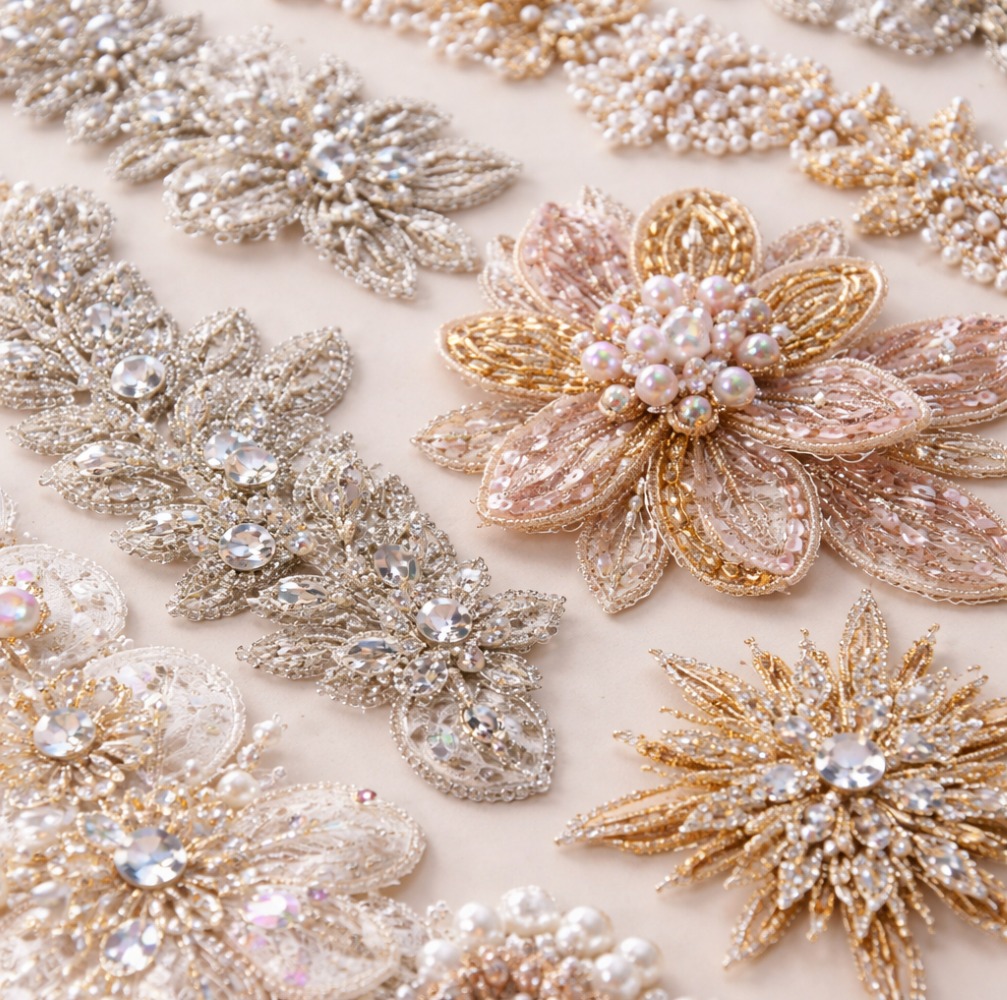
Rhinestone and sequin appliques come in pre-made patches for easy use
-
Available in cotton, polyester, and blended fabrics
-
Can be sewn or glued depending on the project
-
Resistant to light washing when properly attached
-
Suitable for dresses, curtains, bags, and craft items
-
Available in bulk packs for sellers and frequent users
-
Many designs include both embroidery and sequins for layered effect
Real-World Examples
One Etsy seller reported a 25% increase in sales after adding sequin lace borders to handmade dresses in 2025. This was based on public seller updates and shop analytics.
An eBay seller using Terapeak data doubled listings featuring rhinestone lace trims. The seller noted higher click-through rates compared to plain designs.
Jungle Scout data for Amazon shows that decorative trims, including lace with sequins, have steady monthly demand. Products with visual enhancements often rank higher in categories like wedding accessories and craft supplies.
A small craft business also tested adding appliques to plain tote bags. Sales increased within two months due to improved product images and perceived value.
These examples show that small design upgrades can impact visibility, sales, and user satisfaction.
FAQs
1. Can I use glue instead of sewing?
Yes, fabric glue works for light use items.
2. Are sequins washable?
Yes, but use gentle wash settings.
3. Where can I buy lace borders?
Amazon, Etsy, and local fabric stores.
4. Do appliques come ready-made?
Yes, many are pre-designed patches.
5. Are they beginner-friendly?
Yes, no advanced skills needed.
6. Can I mix lace and rhinestones?
Yes, combining them improves detail and design.
Conclusion
Plain edges make good items look average. That is the real problem. It becomes more visible in events, photos, and online marketplaces. Lace borders, sequins, and rhinestone appliques fix this by adding detail where it matters most.
They are simple to use, affordable, and proven to work. Market data and seller examples confirm growing demand. You do not need to start from scratch. You just need to upgrade what you already have.
If you want better results in your next project, start small. Try lace with sequins or appliques on one piece. See the difference. Then scale it up.