Introduction
Ever finished a dress, curtain, or craft project and thought something was missing? Many makers face this issue. The fabric is good. The stitching is clean. But the edges look plain. Plain edges can make handmade items look unfinished, especially when selling online. Buyers scroll fast on platforms like Etsy, Amazon, or eBay. If your product does not stand out in a few seconds, it gets ignored.
This is a real challenge for small sellers. Many handmade creators in India spend hours sewing clothes or craft items but struggle to increase sales. Simple designs often blend into thousands of similar listings online. According to a 2025 Statista textile report, decorative lace and trim products have seen steady global growth due to demand in bridal wear, fashion accessories, and DIY crafts. The decorative lace market alone is expected to grow over 6% annually through the decade.
So how do small sellers improve their products without adding huge costs?
One simple upgrade is lace border designs and embroidered flower lace. Adding rhinestone and sequin appliqués can also change the visual impact of a garment quickly. These small additions create texture, sparkle, and structure. Many platforms like Etsy report that garments with decorative lace trims often sell for 15–20% higher prices compared to plain versions.
If you are tired of plain clothes or slow handmade sales, lace borders and embroidered flower lace can help. Let’s break down how these designs work and how real sellers use them to grow.
Features: Lace Borders, Embroidered Flower Lace, and Appliqué Techniques
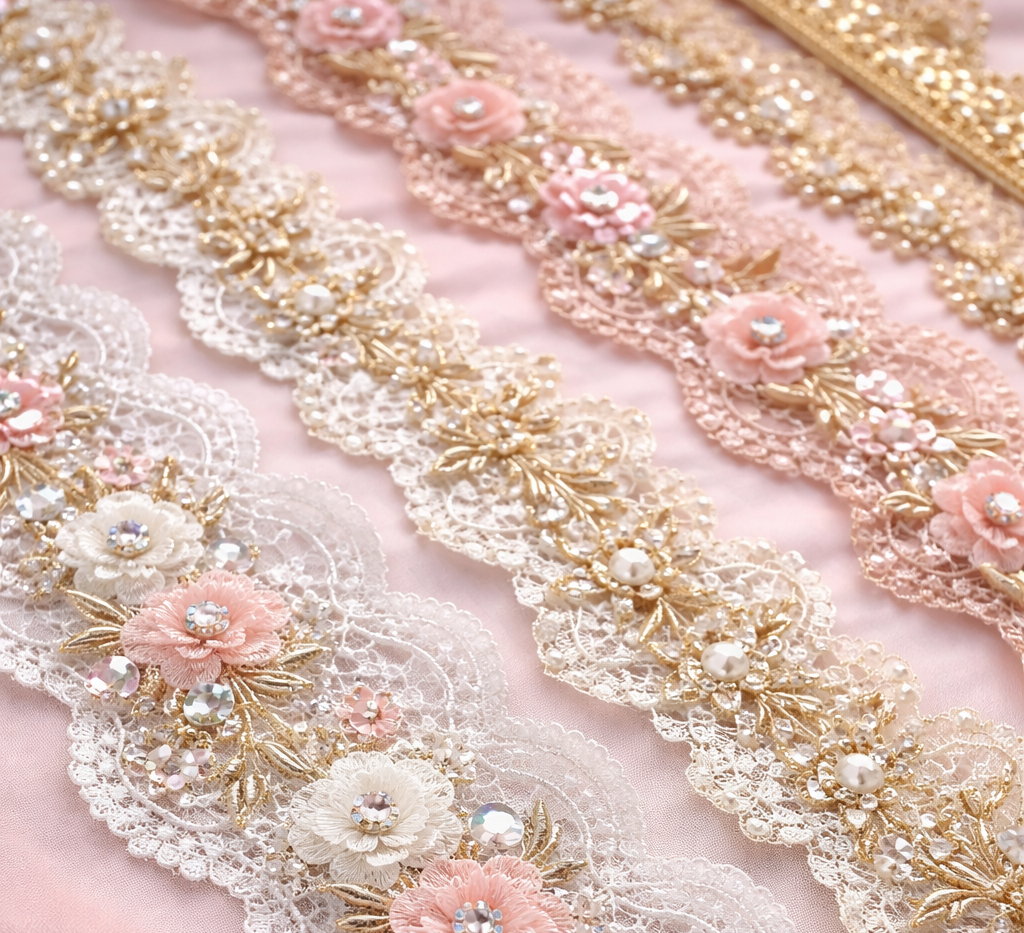
Lace borders are decorative strips sewn along edges of garments or fabrics. They are used on dresses, scarves, pillow covers, curtains, and craft items. Most lace borders range between 1 inch and 6 inches in width.
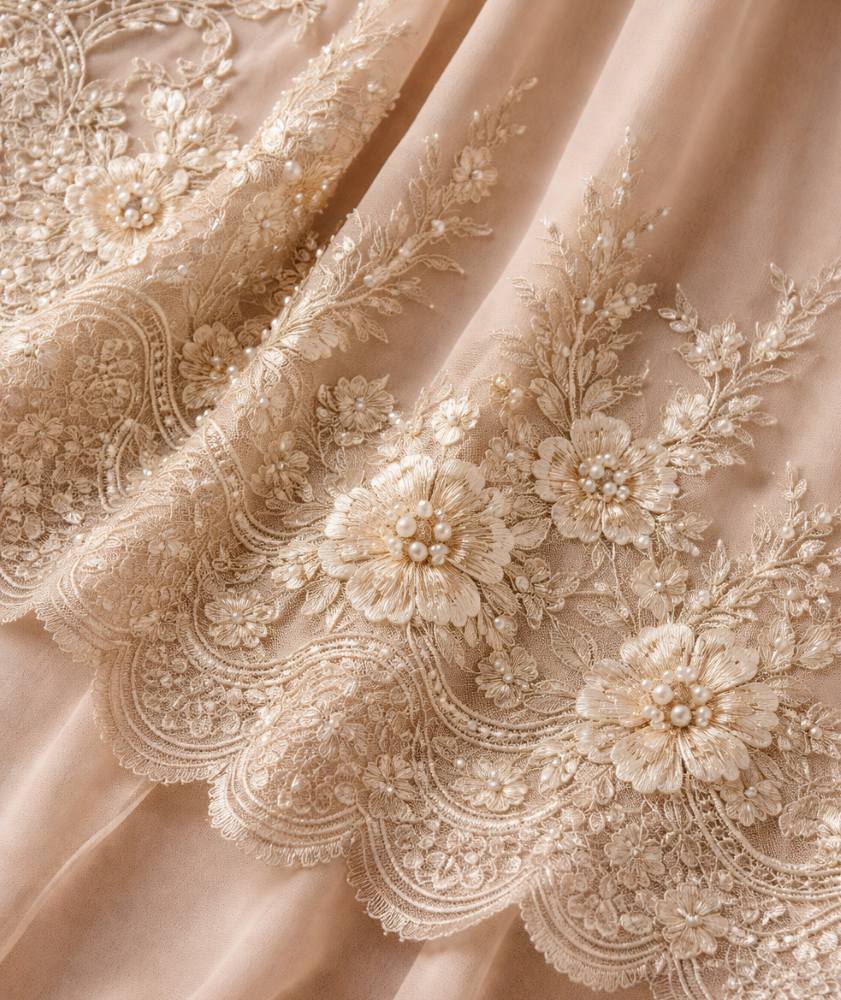
Common lace border types include scalloped lace, straight edge lace, and floral lace trims. Scalloped lace creates a curved edge that works well on sleeves and hems. Straight lace trims are easier for beginners because they align with fabric edges easily. Floral lace borders include repeating flower motifs stitched into mesh or cotton lace fabric.
Embroidery plays a major role in flower lace designs. Embroidered flower lace is usually created using polyester, cotton, or rayon thread stitched over lace mesh. Brother sewing machine guides suggest stitch densities between 4 and 7 stitches per millimeter for decorative embroidery work. This density keeps patterns visible while preventing thread bunching.
But simply sewing lace is not always enough. Some sellers try lace once and feel disappointed with results. This happens because of common mistakes.
First, many beginners use weak thread tension when attaching lace. That causes lace to curl after washing. Second, incorrect needle sizes damage delicate lace mesh. Most embroidery guides recommend using size 70 or 80 needles for lightweight lace fabrics.
Another challenge is durability. Cheap trims often tear during sewing. That leads to wasted time and materials. Buyers also notice loose threads in product photos, which reduces trust.
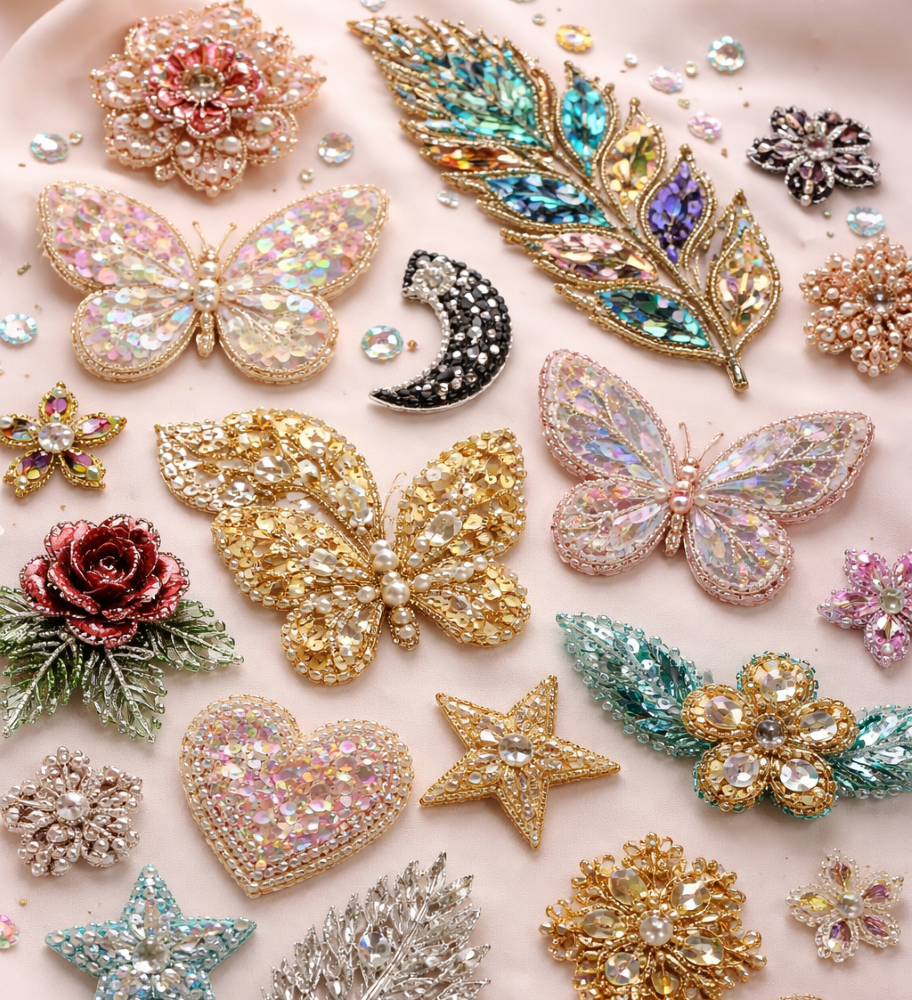
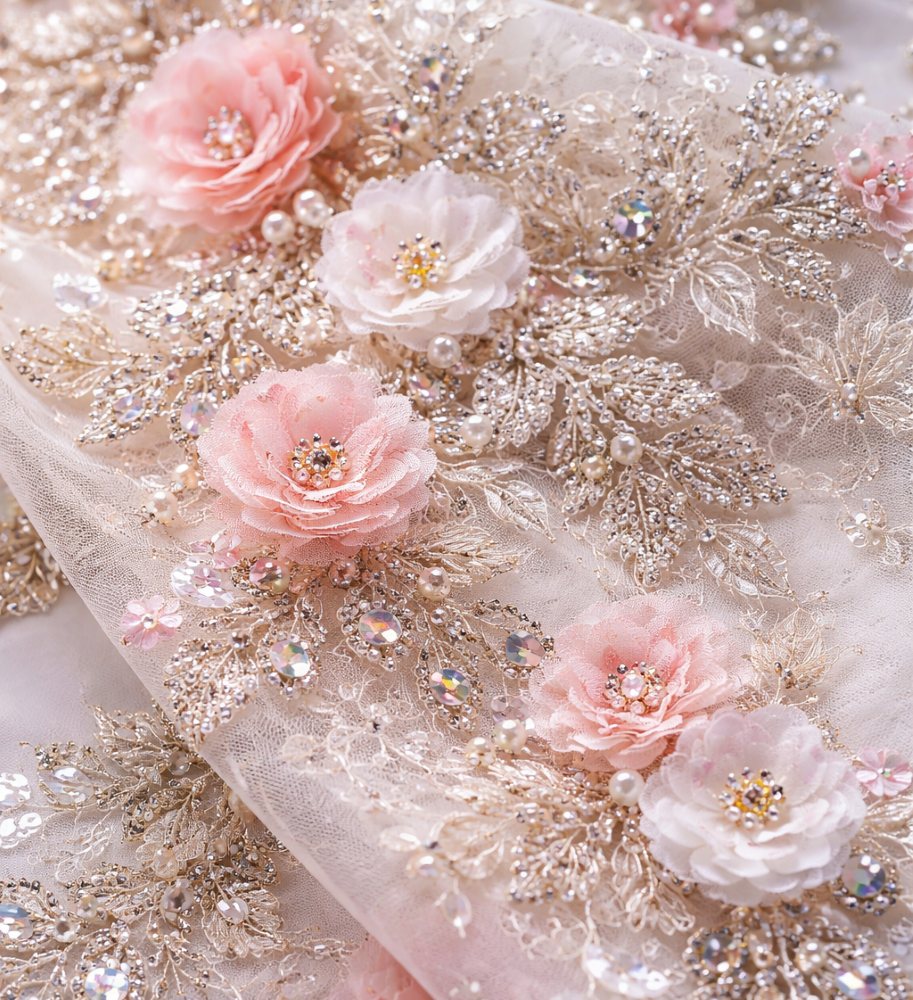
This is where rhinestone and sequin appliqués come in. These small decorations are usually sewn or heat pressed onto lace surfaces. Sequins typically measure between 3 mm and 7 mm in diameter. Rhinestones vary between 2 mm and 6 mm depending on design.
When applied correctly, sequins reflect light and highlight lace patterns. Rhinestones add structure to floral centers or border edges. Sewing experts recommend attaching appliqués after the lace is fixed onto the garment. That keeps alignment accurate.
Tools required for this work are simple. A basic sewing machine with zigzag stitch works well for lace borders. Embroidery machines allow more complex flower patterns. Appliqués can be applied using fabric glue, heat press sheets, or hand stitching.
The process is straightforward. First, cut lace to match garment edges. Second, pin the lace border carefully to prevent shifting. Third, stitch using zigzag or decorative embroidery stitches. Finally, attach rhinestones or sequins on flower centers or repeating motifs.
These steps take extra effort, but the result improves product value. Etsy marketplace analytics suggest garments with decorative lace trims often receive 20–30% more buyer clicks compared to plain listings.
Real-World Examples
Let’s look at real examples of how sellers use these designs to grow sales.
Case one comes from an Indian seller based in Surat who exported handmade dresses through eBay. The seller originally listed cotton dresses with plain hems. Monthly revenue stayed around $900 for nearly six months.
After studying successful listings, the seller began adding embroidered flower lace borders to dress hems. Each border was about 3 inches wide with polyester embroidery thread. The seller also added small 4 mm sequins inside flower shapes.
The cost increase per dress was only about $1.50. But the visual change was noticeable in listing photos. Within three months, the average selling price increased from $22 to $29. Monthly revenue grew to around $1,300. That is roughly a 35% increase.
Another example involves bridal accessory makers in Delhi. These sellers produced lace veils for export markets in the United States. Their original veils used plain tulle edges.
After switching to scalloped embroidered flower lace borders with rhinestone appliqués, product engagement improved. According to their marketplace analytics, product views increased about 28%. The average order value also increased by about 18%.
The third example focuses on craft sellers producing decorative pillow covers. Many of these sellers rely on cotton fabrics sourced from Jaipur textile markets. By adding lace border trims and simple sequin appliqués around edges, sellers positioned their products as decorative home items rather than basic cushions.
That repositioning allowed them to price pillow covers nearly 20% higher. Shipping through India Post small parcel services also helped maintain profit margins for international orders.
These examples show how small visual upgrades can create real business impact.
FAQs
Where can I source lace borders in India?
Large textile markets like Surat, Mumbai, and Delhi offer wide lace trim selections. Online wholesale platforms also supply embroidered lace trims suitable for export products.
Are lace borders compatible with normal sewing machines?
Yes. Most lace borders can be stitched using basic sewing machines with zigzag or decorative stitches. No advanced embroidery machine is required for simple designs.
How much should I price lace decorated products on Amazon?
Many sellers increase product prices between 15% and 30% after adding lace trims or appliqués. The exact price depends on fabric cost and competition.
Do rhinestone appliqués survive washing?
Yes, if sewn properly. Heat-press stones may loosen after many washes, but stitched rhinestones remain durable.
What fabrics work best with embroidered flower lace?
Cotton, tulle, chiffon, and lightweight polyester fabrics work well. Thick fabrics can hide lace details.
How long does it take to attach lace borders?
Beginners usually spend about 10 to 20 minutes attaching lace to a garment edge depending on design length.
Conclusion
Lace border designs and embroidered flower lace offer a simple way to upgrade handmade products. Many sellers struggle with plain designs that fail to attract buyers online. That problem slows sales and limits pricing power.
Adding decorative lace borders creates visual interest quickly. Embroidered flower lace brings texture and pattern to garments. Rhinestone and sequin appliqués add highlights that make designs stand out in product photos.
The tools required are basic. A simple sewing machine, correct needles, and quality lace trims are enough to begin. Small design upgrades can increase product value by 15–20% according to marketplace analytics.
Real sellers in India already use these techniques to grow revenue in export markets. Whether you sell on Etsy, Amazon, or eBay, lace trims can help your listings stand out.
So if your products feel plain, try starting with one simple project. Add a lace border to a dress hem, scarf edge, or pillow cover. Attach a few rhinestone or sequin appliqués to highlight flower designs.
Small changes can create big results.